Why Data Cleaning Is More Important Than Choosing the Right Model
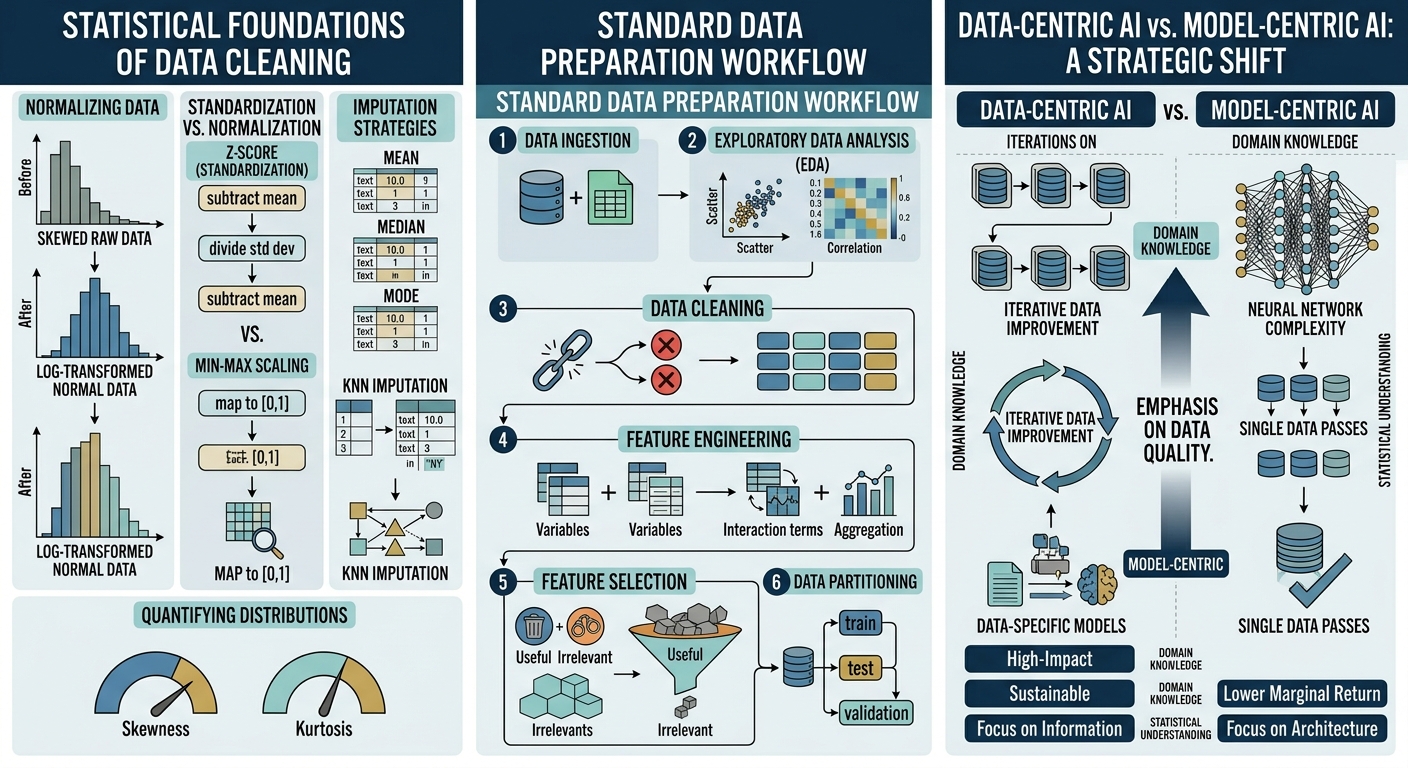
When people think about Data Science, they often imagine machine learning models and sophisticated algorithms. As a Data Science student, I initially thought model selection was the most important step in a project. However, I quickly learned that even the most advanced algorithm cannot compensate for poor-quality data.
This realization aligns with the growing idea of Data-Centric AI, where improving data quality is often more impactful than constantly improving model architectures.
Data Cleaning Is More Than Removing Missing Values
Most datasets contain problems such as missing values, duplicate observations, inconsistent entries, incorrect data types, and outliers. While modern tools make it easy to detect these, deciding how to handle them requires statistical understanding and domain knowledge.
Why Data Distribution Matters
Understanding the distribution of the data is critical. For skewed datasets like salaries or housing prices, the mean can be misleading, and the median often provides a better representation.
Outliers: Error or Valuable Information?
Should an outlier of €10,000 be removed? It depends on context—it could be a mistake, a high-value customer, or a fraudulent transaction.
The Importance of Domain Knowledge
Without context, cleaning decisions can introduce new errors. For instance, in healthcare, missing measurements may indicate equipment failure, whereas in finance, they might signal system issues.
Feature Selection Matters Too
Irrelevant features add noise and reduce model performance. Selecting meaningful variables is key to high-quality data.
Conclusion
Data cleaning is not just preprocessing; it combines statistics, domain expertise, and critical thinking. Better data contributes more to success than a better algorithm.